

The moment I could control four characters at the same time, the pace of the battle suddenly changed. The hunter's arrow is already on the string, the witch's powder is about to be sprinkled, the warrior's heavy shield is half raised, and the spirit singer's singing is just to the key syllable - four cursors flash on the screen, and time is almost still. I have to decide the actions of four people in the same second, because here, hatred and harm never happen alone. _Arco_ uses its unique "real-time team tactics" system to tell me that revenge is a net, everyone is deeply immersed in it, and no one can break free alone.
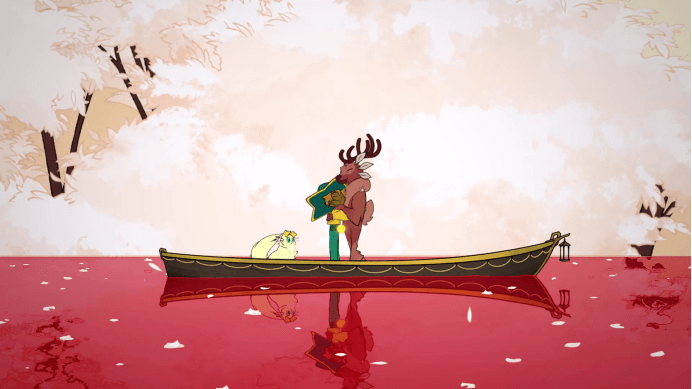
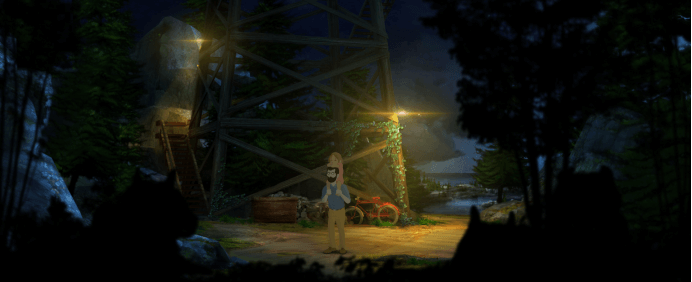
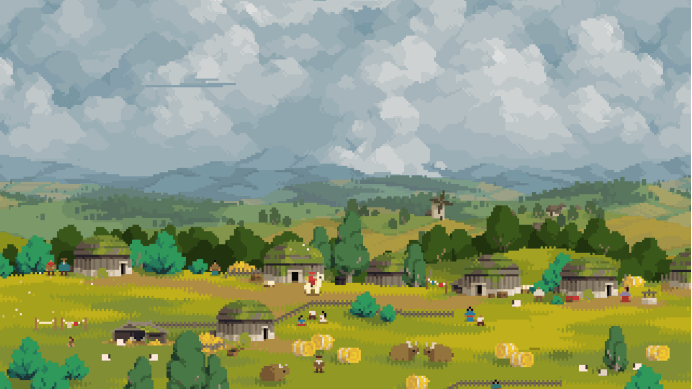
We are in a fantasy American continent. The hand-painted style of the picture is as bright as a mural, but it depicts colonial scars: the roots of the tree are wrapped around the rusty armor, the face of the statue is engraved with strange words, and even the clouds in the sky vaguely form the outline of the fleet. The team I led each had a reason for revenge - the family was destroyed, the holy land was desecrated, and the language was banned. But whenever they get close to the enemy, the perspective of the game will be forced to be pulled away, allowing me to see the avengers, enemies, and the innocent people who are about to be implicated at the same time.
Synchronous control creates a strange moral tension. I can let the hunter's arrow shoot at the enemy's throat, but at the same moment, it must be decided whether the witch doctor should treat the injured companions or poison the enemy; whether the warrior should block the counterattack or cover the panicked villagers behind him. Without the calmness of the turn-based system, all decisions are intertwined. The most annoying time, in order to perfect revenge chain, I let the spirit singer sing the melody that confused the enemy, but it caused her to be scratched by the arrow. After the victory, the avoidable scar on her leg became the only noise in my perfect tactics.
As the expedition deepened, the goal of revenge began to be blurred. We found that enemies were also victims, and behind the atrocities was a larger colonial machine. Those sentries destroyed by us will soon be taken over by more cruel forces; our liberated villages will fall into internal strife because they have lost their original balance. The "echo" of revenge quietly appeared through a branch mission: a young soldier who was forgiven by us later became a bridge of peace; and an officer we decisively killed, his orphan, became a new seed of hatred a few years later.
The most profound moment of the game takes place in the "Silent Battlefield". When the team members were about to have an internal conflict because of ideological conflict, the system forced me to control the four people who were facing them at the same time. The cursor jumps between angry warriors, desperate witch doctors, hesitant hunters and spiritual singers who try to mediate. I must choose the next sentence and every action for everyone. That time, it took me twenty minutes in real time to find a balance that didn't let anyone collapse. At that moment, I understood that the real reconciliation is not to put down the weapon, but at the moment of tension, it can still leave a gap for the other party to breathe.
There is no traditional Boss in the final battle. What we are facing is a cycle - colonial atrocities give rise to revenge, and revenge gives birth to new atrocities. The condition for victory is not to kill, but to break the cycle: let the hunter's arrows shoot sideways, let the warrior's shield protect the enemy, let the witch doctor heal all the wounded, and let the melody of the spirit singer comfort both sides at the same time. When the four characters put down their blood feuds and choose to build a fragile but brand-new balance, the battle settlement on the screen is not experience value, but an old proverb that slowly emerges: "After the forest fire, the first to germinate is always the trees with the deepest roots."
After exiting the game, I looked at my hands. _Arco_ didn't give me the pleasure of revenge. It gave me four simultaneous weights. It reminds me of the entangled conflicts in reality and how hatred bounces back in time like an echo. And the real courage may not be to raise a weapon, but to choose to understand at the moment of revenge - to understand how long the chain of injury is, to understand that you are both a victim or a perpetrator, and still believe that there is always someone who can draw the first different arc in the cycle of hatred.